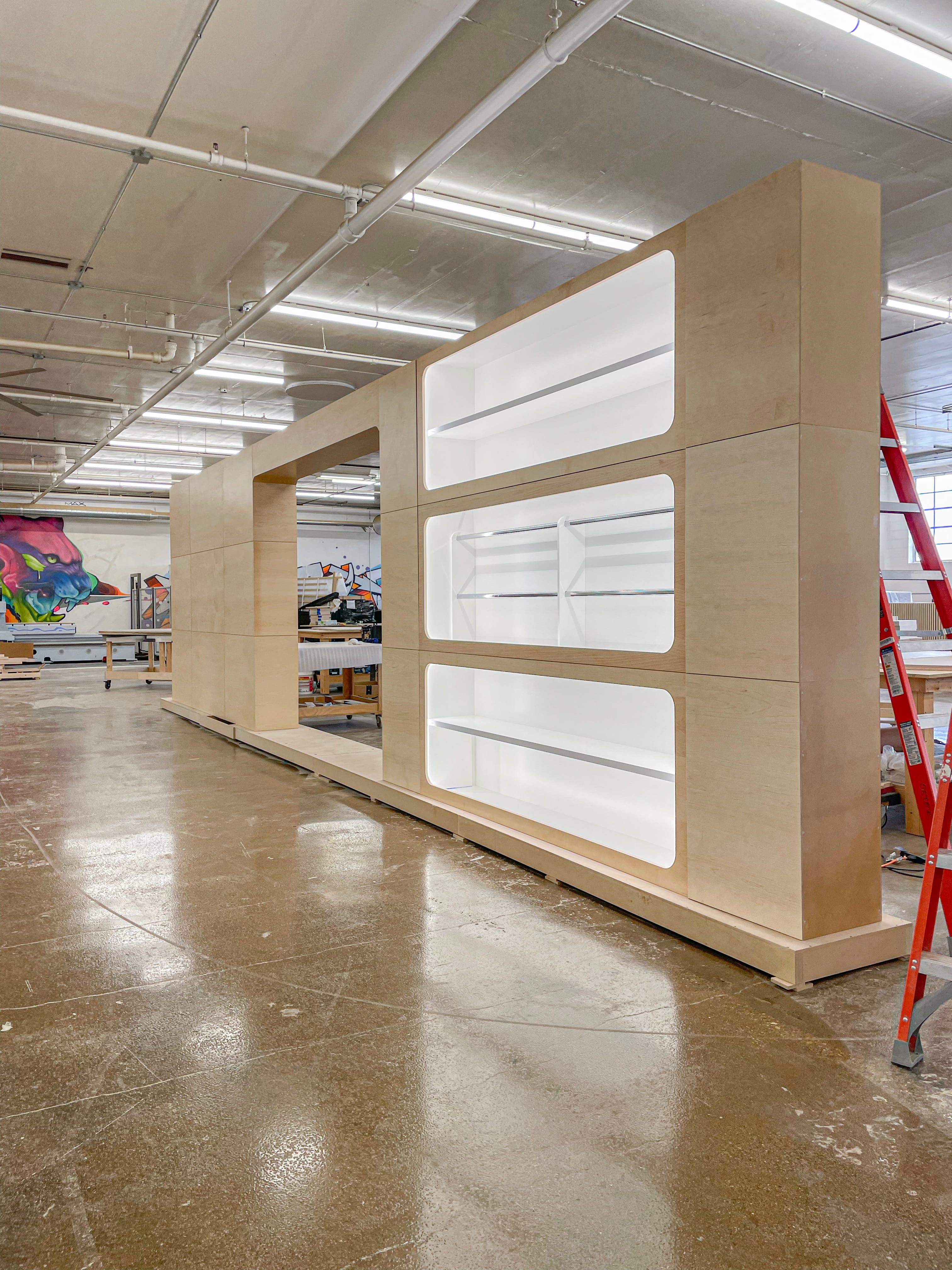
Why 3D Renders Fail: Bridging the "Creative Gap" with Integrated Custom Fabrication
The Illusion of the Perfect Render
We have all been there. You are sitting in a boardroom, the lights are dimmed, and a high-resolution 3D render glows on the screen. It is breathtaking. The lighting is ethereal, the materials look impossible, and the client is ready to sign the check. This is the peak of the project’s optimism.
However, for many agencies, this is also where the trouble begins. In a traditional workflow, that render is sent to a third-party shop for a quote. The shop looks at the cantilevered wood structure or the seamless metal curves and identifies ten reasons why it cannot be built as drawn. By the time the project reaches the floor, it has been "value engineered" into a shadow of its former self.
The Hidden Risks of the "Hand-Off" Model
The primary reason custom fabrication projects fail to meet expectations is the disconnect between the computer screen and the CNC machine. When a design team works in a vacuum, they often prioritize aesthetics over physics. This is not a lack of talent, but a lack of proximity.
Imagine a scenario where a creative lead designs a massive, suspended installation for a trade show. They choose a specific grade of acrylic because of how it catches the light in the software. But when the separate fabrication team receives the files, they realize the material is too heavy for the venue's rigging points.
Because the designer and the fabricator do not talk until the eleventh hour, the client is forced to choose between a massive budget increase for carbon fiber or a "watered down" version of the original dream. This is the "Creative Gap," and it is where brand integrity goes to die.
The Oetee Advantage: Zero Degrees of Separation
At Oetee, we believe that "Intentionally designed" and "Obsessively built" are not two separate steps. They are a single, continuous loop. By housing our custom fabrication services and our design studio at 1200 W Cermak Rd in Chicago, we have eliminated the hand-off entirely.
Our fabricators walk into the design office to discuss weld points while the sketches are still being refined. Our designers step onto the shop floor to touch the wood grains and test the powder coats. This integrated approach means that every render we show a client is already "pre-vetted" for physical reality. We do not promise what we cannot build, and we do not build anything that lacks soul.
Navigating the "Fire Marshal" Factor
Execution certainty is not just about aesthetics; it is about compliance. Think about a retail installation in a high-traffic mall. A beautiful design might use reclaimed wood that looks stunning but fails to meet Class A fire ratings.
In a fragmented model, you might discover this during installation. Imagine a Fire Marshal walking onto your site and shutting down the activation because your vendor didn't verify material certifications during the design phase. By utilizing an integrated design-build process, we solve these technical hurdles months before the truck is even loaded.
Turning Constraints into Creative Features
The best spatial design happens when technical limitations are viewed as opportunities. When a builder tells a designer, "We can't use that joint because it won't hold the weight," a collaborative team does not just give up. They invent a new hardware solution that becomes a visible, beautiful part of the piece.
This is the "Obsessively built" mindset. It is the refusal to accept "good enough." When the people who dream the idea are the same people who cut the steel, the final product possesses a level of detail that is impossible to achieve through a remote vendor relationship.
Why Proximity Matters for National Projects
Even though we are based in Chicago, our "One-Roof" model protects our clients across the map. Whether we are installing in New York or Los Angeles, the project was born in a controlled environment where every variable was accounted for. We ship certainty, not just crates. This eliminates the "Zero-Panic" protocol because we have already solved the problems in our own shop before the client ever sees the work.
Ready to see your vision realized without the compromise?
Contact Oetee at (312) 639-4021 or email us at afterhours@oetee.com to start your project.
Key Takeaways:
- Traditional hand-offs between designers and builders often result in "Value Engineering" that strips away the original creative intent.
- Physical feasibility must be addressed during the conceptual phase, not after the budget is approved.
- Integrated custom fabrication eliminates the "Creative Gap" by keeping designers and fabricators under one roof.
- True quality is found in the "Zero Degrees of Separation" model where technical constraints inform creative solutions.
